Tomorrow Will Be Better Embroidery Review
As a designer who spends more time than I care to admit staring at stitch charts and fabric swatches, I approach every new embroidery file with a mix of optimism and skepticism. We have all been there: you find a design that looks perfect in the thumbnail, but when you pull it up on your screen or load it into the hoop, something feels off. The spacing is tight, the mood is muddy, or the details are going to vanish after one wash. That is why I take the time to evaluate designs like Tomorrow Will Be Better - Quote - Coloring Page not just as a digital asset, but as a physical product waiting to happen.
This piece falls under the category of Coloring Pages Adult within the broader Crafts sector, which immediately sets a specific expectation. It suggests a layout that mimics the clean lines and bold shapes found in adult coloring books—designs meant for relaxation, mindfulness, and creative expression. But does that translate well to thread? Can a static, black-and-white concept survive the transition to color, texture, and tension on an embroidery machine? Let’s break down how this machine embroidery design performs in real-world scenarios.
The First Impression: Mood and Layout
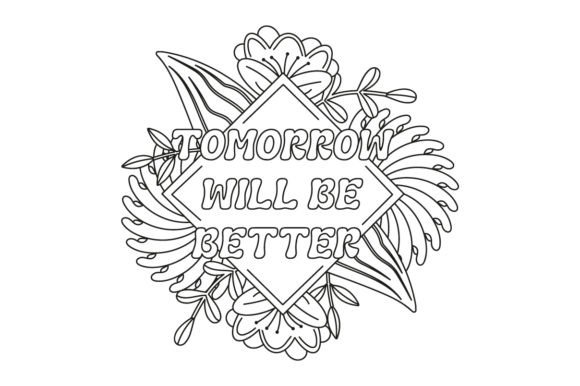
When I first loaded the files associated with Tomorrow Will Be Better - Quote - Coloring Page, what struck me was the clarity of its visual personality. The title itself carries a weight of optimism that is rare in today’s fast-paced craft market. People are looking for comfort. They are looking for reminders. This design delivers that through a layout that likely balances typography with illustrative elements typical of coloring pages.
In my experience, quote-based designs are risky. If the lettering is too thin, it becomes illegible. If the surrounding graphics are too dense, they compete with the message. From what I can see in the provided formats—SVG File, Transparent PNG, EPS, and DXF—the vector nature of these assets suggests clean edges and scalable geometry. This is crucial for embroidery because it means the underlying structure is solid. Whether you are converting this into an applique design or using it as a guide for heavy fill stitch work, the foundation is there. The "coloring page" aesthetic implies large areas of negative space or distinct blocks of color, which actually makes this much easier to digitize effectively compared to intricate, photorealistic portraits.
Real-World Application: Where Does This Fit?
I don’t believe in designs that only live on a computer screen. A good embroidery project must earn its place on a garment or accessory. So, where does Tomorrow Will Be Better - Quote - Coloring Page shine?
First, let’s talk about custom apparel. This design has strong potential for sweatshirt embroidery. The optimistic message pairs beautifully with cozy fabrics like French terry or fleece. Imagine a crewneck sweatshirt in heather grey or oatmeal, featuring this design centered on the chest or placed subtly over the heart. The contrast between the soft fabric and the structured stitching would create a high-end, boutique feel. It moves beyond generic motivational quotes because the "coloring page" style adds a layer of artistic whimsy that appeals to the millennial and Gen Z demographics who dominate the Etsy seller space.
Second, consider the tote bag design angle. Canvas totes are a staple for craft business owners. However, many sellers struggle with designs that look cluttered on such a large, flat surface. A design inspired by adult coloring pages often has a balanced composition that works well here. You could use a single vibrant thread color for the outline and leave the interior open, or fill specific sections with bright thread colors to mimic the act of coloring. It turns a simple tote into a conversation starter.
For those making personalized gift items, this design is versatile. It fits perfectly on baby embroidery projects, such as muslin blankets or onesies, where parents appreciate gentle, hopeful messages. It also works for holiday embroidery, particularly around New Year’s or winter holidays, where sentiments of hope and renewal are highly valued. Think of it as a finished product that brings warmth to a recipient during colder months.
Patches and Accessories
Another practical use case is the embroidered patch. With the SVG and DXF files available, you can easily create applique patches. These can be sewn onto denim jackets, backpacks, or caps. The clean lines of a coloring-page style design cut cleanly and hold their shape well on a patch, avoiding the fraying issues that sometimes plague complex, jagged outlines.
Where to Exercise Caution
No design is flawless, and as a reviewer, I need to highlight where Tomorrow Will Be Better - Quote - Coloring Page might present challenges. Embroidery is a mechanical process governed by physics, and even the best artwork can fail if ignored.
Be careful with small hoop sizes. If the design includes tiny lettering or delicate decorative accents, scaling it down too far will result in lost detail. Thread thickness plays a huge role here; a 40-weight polyester thread will cover more area than a finer rayon, potentially blurring small details. Always check the stitch density before committing to a small finish size.
Fabric choice is equally critical. Avoid using this on stretchy knits without proper stabilization, as the tension of the stitches can pucker the material. Textured fabrics, like chunky wools or heavy tweeds, can hide the intricacies of the design. Similarly, dark fabrics require careful thread color selection. If the design relies on subtle shading or light outlines, they may disappear against a black background unless you use a contrasting underlay or topstitch carefully.
Also, consider the end-use of the item. If you are selling commercial embroidery products like aprons or kitchen towels that will undergo frequent washing, ensure the design is not so densely packed that it traps moisture or wears out quickly. Simpler, bolder elements tend to age better on utilitarian items.
Practical Designer Notes for Implementation
If you are planning to use this design for your small shop product line or personal creations, here is my checklist for success:
- Test on Scrap Fabric: Never go straight to the final product. Stitch the design on a scrap of the same fabric type to check for puckering, thread breaks, or alignment issues.
- Review Stitch Density: Look at the digitization. Are there areas where the needle penetrates the fabric too frequently, risking damage? Are there gaps that look messy? Adjust the settings in your embroidery software if necessary.
- Check Hoop Size: Confirm that the design fits comfortably within your standard hoops (e.g., 5x7, 6x10) without requiring awkward re-hooping, unless that is part of your workflow.
- Inspect Small Details: Zoom in on the digital preview. Do the curves flow smoothly? Are the corners sharp enough? If the original vector art has jagged edges, your embroidery may look rough.
- Mockup in Black and White: Before adding color, view the design in grayscale. This helps you assess the balance of light and dark areas, ensuring the design has visual weight and doesn’t look washed out.
- Stabilizer Selection: Use the right stabilizer for your fabric. Cut-away for knits, tear-away for wovens. This is non-negotiable for a professional finish.
- Licensing Check: Since this is a digital asset, verify the license terms. Are you allowed to sell finished items? Can you modify the design? Clarity here protects your craft business from legal issues.
Final Verdict
Tomorrow Will Be Better - Quote - Coloring Page is more than just a pretty picture. It is a functional, emotionally resonant design that bridges the gap between digital art and tactile craft. Its strength lies in its simplicity and positive messaging, making it accessible to a wide audience. For Etsy sellers, handmade enthusiasts, and professional decorators, it offers a reliable foundation for creating high-value items like sweatshirt embroidery, custom totes, and heartfelt gifts.
It may not be the most complex design in the world, but complexity isn't always the goal. Sometimes, the goal is clarity, emotion, and wearability. This design hits those marks. By paying attention to the technical details—hoop size, fabric choice, and stitch quality—you can transform this digital file into a handmade product that customers will love to wear and display. Just remember to test thoroughly, respect the limitations of the medium, and let the optimistic spirit of the design guide your creative choices.