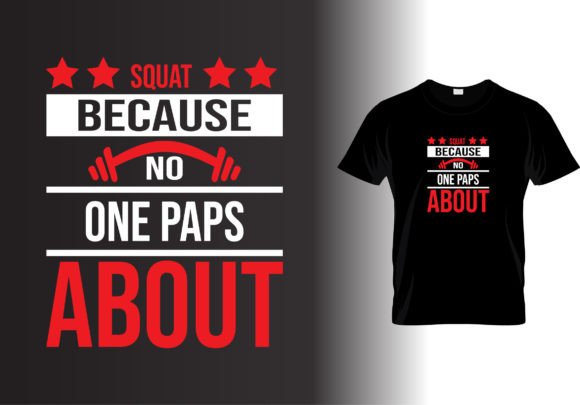
Reviewing Christmas T-shirt Design 4 for Embroidery
As a designer who spends more time staring at stitch patterns than sleeping, I have learned to trust my gut when it comes to digital assets. Before committing a design to fabric—especially for a client or a small business inventory—I need to know if it holds up under the needle. Today, I am putting Christmas T-shirt Design 4 through its paces. This isn't just about how it looks on a screen; it is about how it translates into a tangible, high-quality embroidered piece.
The product listing provides a robust set of files: a transparent PNG for print-ready visualization, an editable Adobe Illustrator CS6 AI file, an EPS file from the same version, and an SVG. For those of us working in vector-based workflows or needing precise scaling for different garment sizes, having access to the source vectors (AI/EPS) and scalable paths (SVG) is a massive advantage over receiving only raster images. However, as an embroidery specialist, my primary concern is always the final stitched result.
First Impressions and Visual Personality
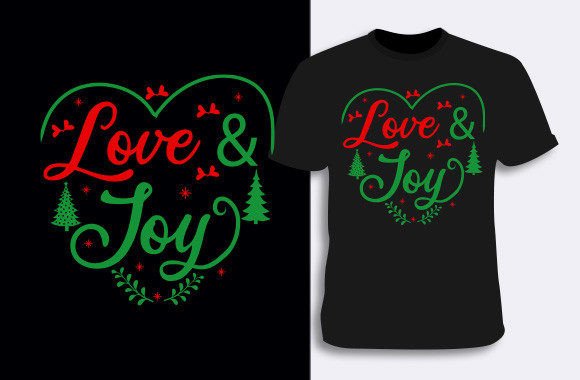
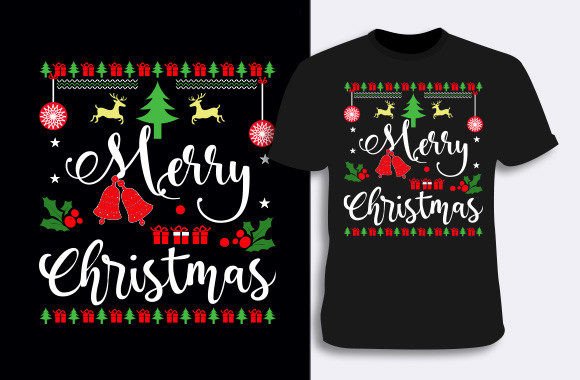
When you first load Christmas T-shirt Design 4, the mood is immediately established. It feels festive but not chaotic. In the world of holiday merchandise, there is a fine line between "charming" and "overwhelming." This design seems to lean toward the latter unless handled with care. The layout appears dense, which suggests it will make a bold statement on apparel but requires strategic placement to avoid looking cluttered on smaller items.
The visual personality is warm and traditional. It screams "holiday gathering," making it perfect for family matching outfits, cozy sweatshirts, or nostalgic gift sets. However, because we are dealing with T-Shirt Designs and Graphics that will likely be digitized or traced for embroidery, the simplicity of the shapes matters. If the original graphic relies heavily on complex gradients or tiny text, it may lose definition once converted into thread. My initial read is that this design works best when used as a central focal point rather than a subtle accent.
Real-World Application: The Custom Gift Scenario
Let’s imagine a real scenario. A client comes to me asking for custom embroidered aprons for her bakery staff, along with matching tote bags for customers during the holiday season. She loves Christmas T-shirt Design 4. Here is how I would evaluate its performance in that specific context.
For the Apron: This design would shine on a canvas or heavy cotton apron. The density of the graphics can handle the sturdy fabric without warping. It adds a professional yet festive touch to a work environment. Customers buying these would see immediate value in the branded holiday spirit.
For the Tote Bag: A canvas tote is another natural home for this asset. The design’s width likely translates well to the flat surface of a bag. However, I would advise against placing it on the very bottom edge where it might rub against surfaces. Center chest or upper center placement ensures the details remain visible and intact.
For Baby Items: This is where caution is needed. While cute, if Christmas T-shirt Design 4 contains hard edges or dense fill stitches, it might be too stiff for delicate baby bodysuits or blankets. Softness is paramount in baby products. If the design allows for reduced stitch density or simplified outlines, it could work beautifully for nursery decor or holiday photo props.
Technical Considerations for Embroidery
Converting a graphic into an embroidery file is an art form. Even with the provided AI and SVG files, the digitization process dictates the final quality. Here are the critical factors to consider before running this design on the machine.
- Stitch Density: High-density designs can cause puckering, especially on lightweight t-shirts. You must check if the fill stitch areas are balanced. If the design is too thick, it may feel like a plastic patch on the wearer's skin.
- Hoop Size Constraints: Ensure the design fits comfortably within your standard hoop sizes. If the design is wide, you may need a larger hoop or a multi-hooping sequence, which increases production time and potential alignment errors.
- Thread Color Contrast: On dark fabrics, light thread colors can disappear. Test Christmas T-shirt Design 4 in black and white mockups to ensure the contrast remains strong. Using a stabilizer that matches the fabric color can also help maintain visual integrity.
- Satin Stitch Quality: Outlines and lettering rely on satin stitches. If the curves are too tight, the thread may break or look jagged. Inspect the corners of any geometric elements in the SVG to ensure they can be rendered smoothly in thread.
Fabric and Surface Challenges
Not all surfaces play nice with every design. When using Christmas T-shirt Design 4, avoid textured fabrics like bouclé or heavy chenille, as the needle may struggle to penetrate evenly, leading to skipped stitches. Stretchy knits require a cut-away stabilizer to prevent distortion. Furthermore, curved surfaces like baseball caps pose a challenge; if the design is not specifically optimized for curvature, it may look distorted when viewed from the side.
Impact on Product Value and Branding
For Etsy sellers and small shop owners, presentation is everything. A well-executed embroidery project signals professionalism and attention to detail. Christmas T-shirt Design 4, when stitched correctly, elevates a generic t-shirt into a personalized gift worthy of a premium price point.
However, poor execution can damage brand trust. Skipped stitches, loose threads, or misaligned placements make a handmade product look cheap. By testing this design on scrap fabric first, you can refine your technique and ensure consistency across your craft business inventory. Consistency builds customer loyalty; buyers return to shops where every item looks as good as the last.
Practical Designer Notes for Success
Before you start producing, follow these steps to guarantee a successful outcome:
- Test on Scrap Fabric: Always run a test stitch on the exact fabric type you plan to use. Check for puckering, tension issues, and color accuracy.
- Verify Licensing: Since you are acquiring digital assets, confirm the licensing terms. Are you allowed to sell finished items? Can you use this for commercial embroidery projects? Clear rights protect your business from legal issues.
- Use Proper Stabilizer: Match the stabilizer to the fabric weight. Heavy fabrics need strong support; light fabrics need gentle backing to prevent holes.
- Inspect Small Details: Zoom in on the SVG and AI files. Are there tiny elements that might get lost in translation? Simplify if necessary.
- Check Thread Colors: Compare your physical thread spools against the digital preview. Screen colors can be deceiving.
Final Verdict
Christmas T-shirt Design 4 is a versatile asset for the right project. Its strength lies in its clear, festive theme, which resonates strongly during the holiday season. With the inclusion of editable vector files, it offers flexibility for customization—a key feature for custom apparel businesses.
It is best suited for stable fabrics like cotton blends, denim, and canvas. It performs well on tote bag design applications, sweatshirt embroidery, and holiday embroidery gifts. However, exercise caution with delicate fabrics, extreme close-ups, and high-stress wear areas.
For the experienced embroiderer, this design is a solid addition to your library of design assets. It saves time by providing multiple file formats while delivering a classic aesthetic that customers appreciate. Just remember: the difference between a good design and a great finished product often comes down to the preparation and precision applied before the needle even touches the fabric.