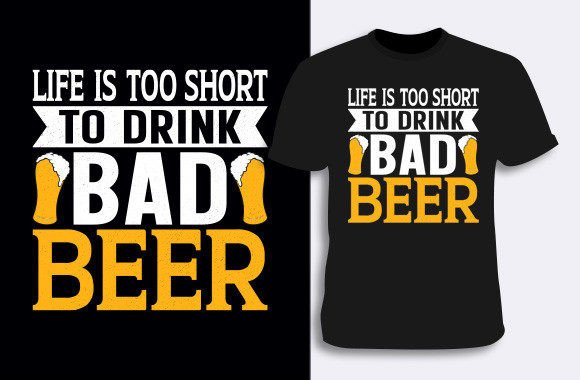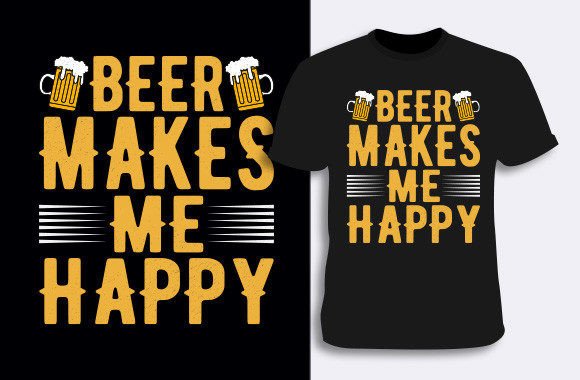
Beer T-shirt Design 8: A Designer’s Review
When I sit down to evaluate a new graphic asset for my embroidery workflow, I am rarely looking at just a pretty picture. I am looking at stitchability, market viability, and how the final product will hold up in the real world. Today, I am putting Beer T-shirt Design 8 through its paces. As a designer who regularly creates custom apparel and handmade products for small businesses, I need to know if this design is worth the time it takes to digitize or print, and whether it will resonate with customers browsing Etsy or walking into a craft fair.
This review focuses on practical application. We are moving past the basic product description of "PNG, AI, EPS, SVG files" and diving into how this T-Shirt Designs category entry performs as a Graphics asset for serious makers. Whether you are an Etsy seller, a boutique owner, or a hobbyist looking to create the perfect personalized gift, here is my honest take on using Beer T-shirt Design 8 in your next project.
First Impressions and Visual Personality
The moment you open the file, the mood of Beer T-shirt Design 8 is clear. It carries a casual, relaxed energy that immediately suggests leisure, celebration, or perhaps a bit of humor. The layout feels balanced, avoiding the cluttered look that often plagues low-quality digital downloads. For an embroidery designer, the clean lines and distinct shapes are a relief; they suggest that when this translates to thread, the result will be crisp rather than muddy.
Visually, the design has a strong identity. It does not try to be everything to everyone. Instead, it leans into a specific aesthetic that works beautifully for custom apparel. The visual personality is approachable, which is crucial for items like tote bag design variations or sweatshirt embroidery. When I mock this up on a heather grey fabric background, the contrast pops without feeling harsh. It feels like a design that belongs in a summer festival shop or a cozy autumn collection, depending on the color palette you choose for your thread colors.
Real-World Application: Where This Design Shines
I recently had a client request a batch of embroidered patches for their brewery’s staff uniforms, and I kept Beer T-shirt Design 8 in mind. Here is where I see this design excelling in actual production scenarios:
- Embroidered Patches and Caps: The central focus of the design makes it ideal for placement on the front panel of a baseball cap or as a standalone patch. The shape likely allows for a clean edge finish, which is critical for embroidered patch durability.
- Sweatshirt Embroidery: For fall and winter collections, placing this design on the chest of a heavyweight sweatshirt creates a professional, branded look. The weight of the garment supports the density of the stitching required for this type of graphic.
- Kitchen and Home Goods: Don’t limit yourself to clothing. This design translates surprisingly well to kitchen towels or aprons. Imagine this stitched onto a canvas apron for a home brewer—it adds a touch of personality to the workspace. It also works as a decorative accent on a pillow cover for a man-cave or game room.
- Baby and Nursery Items: While beer is an adult theme, the graphic style might be simple enough to work for novelty baby onesies or burp cloths aimed at parents with a sense of humor. However, this requires careful consideration of context.
In terms of brand consistency, this design offers a reliable anchor. If you are building a line of small shop product offerings around a "craft culture" or "brewery tour" theme, this asset provides a recognizable visual hook that ties the collection together.
Technical Considerations and Stitching Challenges
As much as I love the look of Beer T-shirt Design 8, no design is perfect for every surface. There are specific areas where I would exercise caution during the digitizing or printing process.
Hoop Size and Density: You must check the recommended hoop size carefully. If the design contains dense fill stitch areas, it may require a larger hoop to prevent fabric distortion. On smaller projects, such as a baby embroidery item or a tiny pocket square, the detail might get lost or cause puckering. Always test the stitch density on scrap fabric first to ensure the backing stabilizer is holding up properly.
Fabric Texture and Stretch: This design looks best on stable, woven fabrics like cotton, denim, or canvas. Avoid using it on highly textured fabrics like chunky knits or bouclé, as the running stitch details may not register clearly. Similarly, while it can work on stretchy jersey knits for t-shirts, you need to use a high-quality tear-away or cut-away stabilizer to maintain the integrity of the satin stitch edges. Without proper stabilization, the design may warp after washing.
Dark Fabrics and Contrast: If you plan to use this on dark-colored garments, you will need to consider underlay stitches or a white base layer to ensure the colors remain vibrant. Poor contrast can make a premium-looking design appear cheap and faded.
Impact on Product Value and Customer Trust
In the world of handmade products, presentation is everything. A well-executed embroidery project signals quality and care. When a customer sees Beer T-shirt Design 8 stitched cleanly on a high-quality tote bag or sweatshirt, it builds immediate trust. It shows that you have invested time in getting the details right.
Conversely, a poorly executed version—loose threads, misaligned stitching, or visible stabilizer residue—can damage your reputation. This is why I always advise checking the design in black and white mockups before finalizing your production run. This helps you verify that the structural elements of the design are clear even without color distraction. It ensures that the finished product looks professional from every angle.
For commercial embroidery purposes, this design has strong giftability. It fits naturally into holiday gift guides, birthday presents for hobbyists, or corporate swag for creative agencies. Its versatility allows it to bridge the gap between a fun novelty item and a stylish piece of custom apparel.
Practical Notes for the Designer
Before you add Beer T-shirt Design 8 to your library of design assets, keep these tips in mind:
- Test on Scrap Fabric: Never go straight to the final product. Run the design on the same fabric type and weight you intend to sell.
- Check Licensing: Since you are receiving AI, EPS, and SVG files, confirm the commercial license terms. Are you allowed to sell finished physical goods? What about digital previews?
- Inspect Small Details: Zoom in on the vector files. Are there any tiny text elements or intricate corners that might not digitize well? Simplify if necessary.
- Stabilizer Choice: Match your stabilizer to the fabric. Heavy fabrics need heavy support; light fabrics need lightweight, removable options.
- Thread Quality: Use high-quality polyester or rayon thread. Cheap thread can break under the tension required for complex fills, ruining the embroidery file outcome.
Ultimately, Beer T-shirt Design 8 is a solid, versatile choice for designers who want to add a touch of casual flair to their inventory. It is not overly complicated, making it accessible for beginners, yet detailed enough to satisfy experienced crafters. By paying attention to the technical nuances of stitching and fabric selection, you can turn this simple graphic into a high-value handmade product that customers will love.